
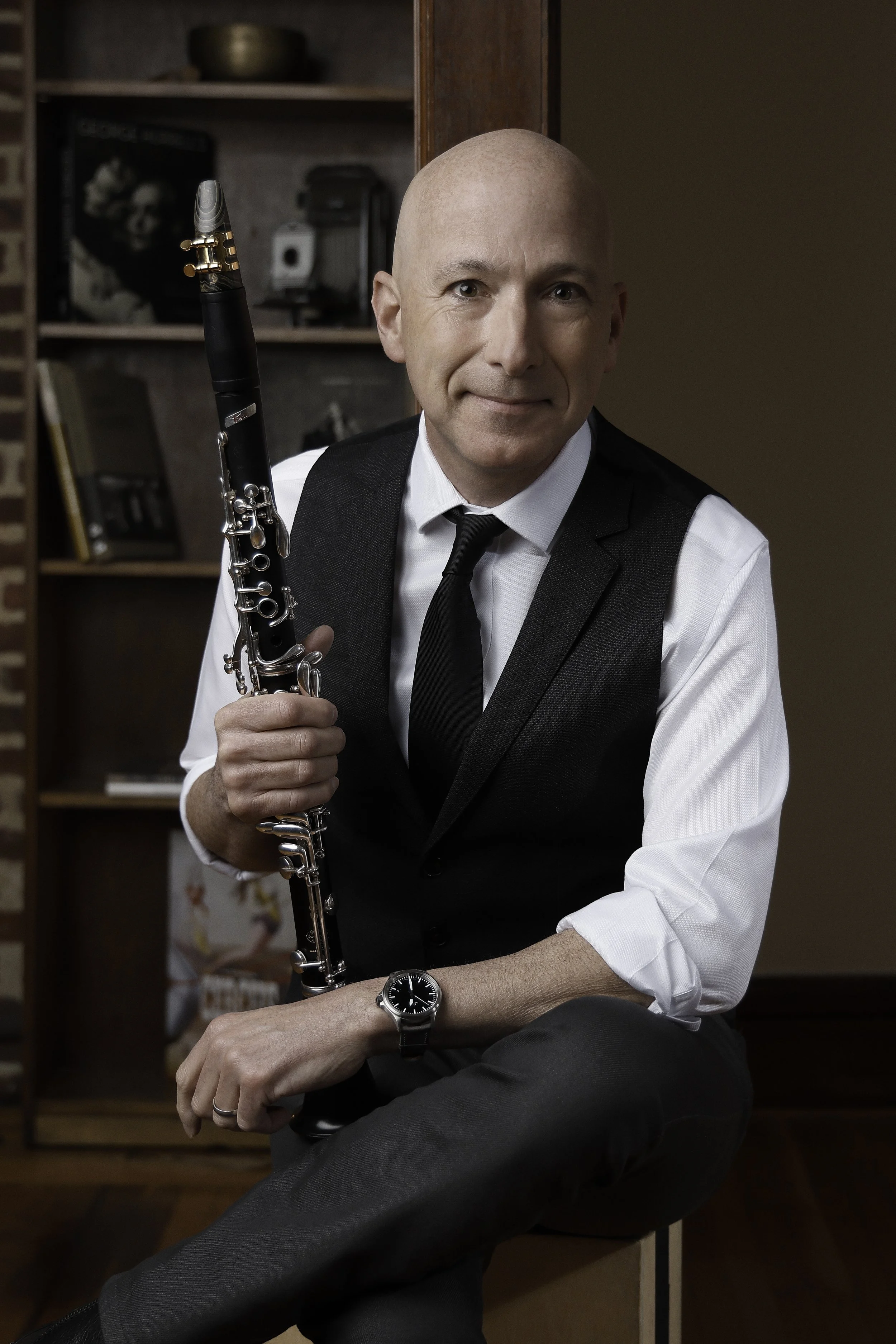
RICHIE HAWLEY did not set out to start a record label in the conventional sense. There was no boardroom epiphany, no tidy business plan sketched onto a legal pad. Instead, there was something subtler, more characteristic: a slow, accumulating dissatisfaction with how classical recordings were made, marketed, and ultimately experienced. The industry, polished and procedural, often felt curiously detached from the very thing it claimed to preserve — the fragile electricity of musical collaboration.
Out of that tension emerged Il Pirata Records, a label less interested in scale than in intention. Hawley founded it not as an entrepreneurial detour, but as a creative extension — a laboratory for artistic projects that might otherwise struggle to exist within traditional frameworks. The label’s ethos is disarmingly simple: recordings are not products first; they are documents of human interaction, of risk, of curiosity made audible.
Hawley’s background makes this evolution feel less like a pivot and more like an inevitability. For nearly two decades, he occupied one of the most exacting seats in orchestral life, serving as principal clarinetist of the Cincinnati Symphony Orchestra. Recording sessions, concert halls, rehearsal rooms — these were environments defined by microscopic listening and relentless refinement. It was here that Hawley developed not only a reputation for tonal nuance but an unusually acute sensitivity to how performances translate into recordings, how microphones, spaces, and production choices shape perception.
Yet Il Pirata Records is not a vanity imprint, nor a vehicle for self-documentation. Its catalog reveals something more interesting: a fascination with projects that blur boundaries — between eras, genres, and listening cultures. Baroque textures coexist with folk intimacy. Contemporary works are framed not as academic statements but as living conversations. The throughline is neither stylistic nor ideological; it is experiential. Each release asks a quiet but pointed question: how might recorded music feel more immediate, more tactile, more alive?
Hawley’s role within the label resists easy categorization. He operates simultaneously as curator, producer, collaborator, and — perhaps most crucially — listener. Those who work with him quickly notice that discussions rarely center on market positioning or algorithmic strategy. The focus is on narrative, pacing, atmosphere. How does a record breathe? Where does the listener lean in? What emotional arc binds disparate pieces into a coherent journey? These are aesthetic questions, certainly, but also structural ones, reflecting Hawley’s conviction that albums are not collections; they are architectures.
There is, too, an undercurrent of skepticism running through the enterprise. Hawley is acutely aware of the paradoxes embedded in classical recording culture: the pursuit of perfection that can sterilize vitality, the reverence for tradition that can discourage invention. Il Pirata Records functions, in part, as a gentle corrective — privileging authenticity over flawlessness, personality over polish, artistic identity over institutional conformity.
At its core, the label reflects Hawley’s broader philosophy about music itself. Performance, teaching, instrument design, recording — these pursuits are not discrete chapters but interconnected expressions of the same curiosity. How does sound move us? How do artists communicate beyond language? How can listening become not passive consumption but active engagement?
In an era obsessed with metrics, Il Pirata Records advances a quietly radical proposition: that artistic value is not measured solely by reach or volume, but by depth of experience. Hawley’s work as a label founder underscores a belief both old-fashioned and strikingly contemporary — that music, when treated with patience and imagination, remains one of the most sophisticated technologies humans have ever devised for sharing meaning.